What Is 999 Fine Silver? Purity, Feel and Everyday Wear
999 fine silver is silver with a stated fineness of 999: 999 parts out of 1,000, or 99.9% silver. For a ring, that high silver content creates a material that is softer and more malleable than traditional sterling silver. It can take on scratches, small dents and changes in its finish as it is worn.
That is neither a universal advantage nor a defect. It is the central choice. Pick fine silver if you value high silver content and are comfortable with a surface that records wear. Choose a harder alloy if keeping a crisper shape and finish matters more to you.
What does “999” mean?
The number is a fineness mark. It describes silver content in parts per thousand, so 999 means 99.9% silver. By comparison, traditional 925 sterling silver is 92.5% silver, with copper commonly making up the remaining 7.5%. Alloy recipes can vary, so “sterling” should not be treated as proof that every piece contains the same secondary metals.
For a fuller material comparison, read 999 Fine Silver vs 925 Sterling Silver.
How does a fine silver ring feel and change?
Fine silver is softer and more malleable than sterling silver. On a ring, that means contact with hard surfaces can leave marks more readily. The exact result depends on the ring, the finish and how it is worn; there is no responsible fixed timeline for when a scratch or dent will appear.
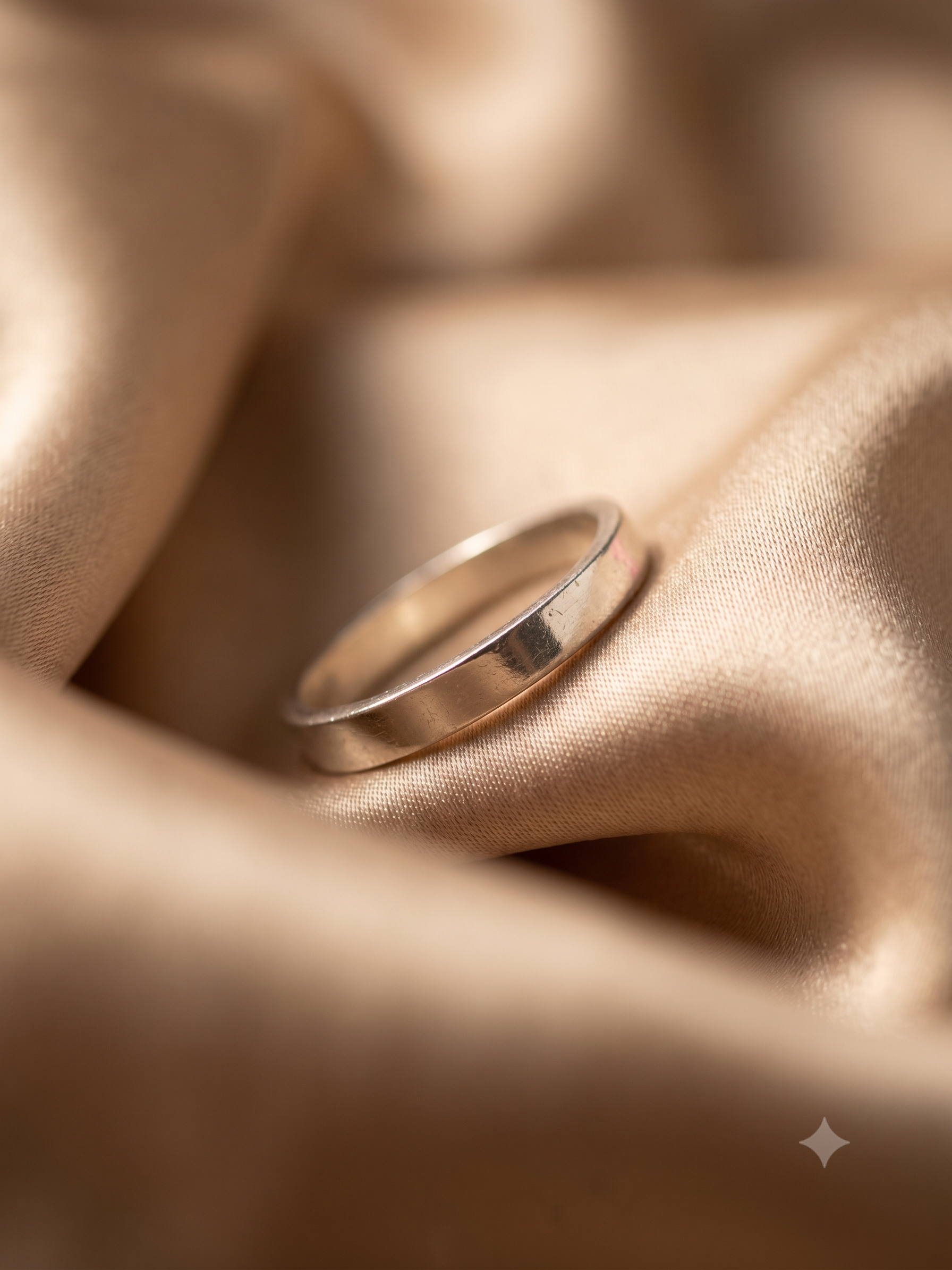
The starting finish changes what you notice. A reflective face makes light and individual marks more visible. A satin-matte face diffuses reflections. A granular texture begins with a more tactile surface. Daily wear can alter all three, rather than leaving the original finish permanently unchanged.
Does 999 fine silver tarnish?
Fine silver can tarnish. Silver reacts with sulfur-containing gases and forms a surface tarnish layer. Its high purity does not make it “tarnish-proof,” and a useful care guide should not promise that it will remain unchanged.
Cleaning should match the condition of the piece and the finish you want to preserve. Polishing is abrasive: it can leave fine scratches and removes a small amount of silver. Avoid treating aggressive polishing as routine maintenance, particularly when the existing hand-finished surface is part of the design.
Is 999 fine silver right for an everyday ring?
It can be, if you accept the material on its own terms. Fine silver suits someone who:
- wants a ring made with 99.9% silver;
- likes a minimal band whose surface can change with wear;
- is comfortable removing the ring when an activity risks impact or deformation; and
- does not expect the ring to resist every scratch or dent, or to stay permanently bright.
A harder alloy may be the better choice if your priority is preserving sharp edges or resisting deformation. Fine silver is also not a guarantee against skin irritation. Reactions around jewellery can have several causes, including friction, trapped moisture or sensitivity to a metal; seek appropriate medical advice for a persistent reaction.
Three expressions of the same material
Forged by You currently offers three hand-finished 999 fine silver bands. Mirror Trace has a reflective face with visible hand marks. Satin Weight has a broader satin-matte face and rounded inner edge. Quiet Texture is a slim band with a fine granular texture and softened edges.
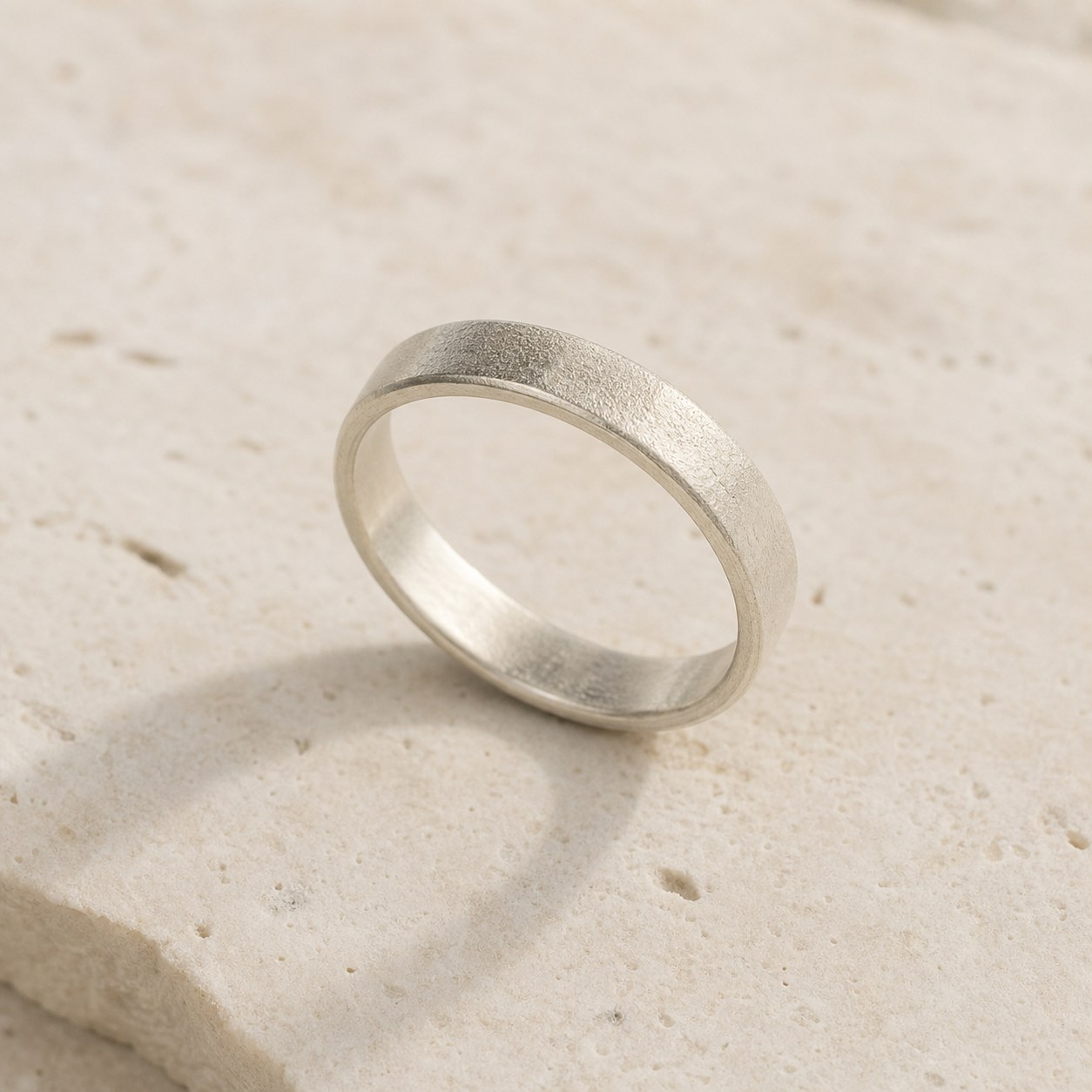
Compare all three 999 fine silver bands and choose the profile and starting finish you want to live with.
Sources
- Rio Grande: types of silver metals for jewellery — fineness, traditional sterling composition and relative softness.
- Canadian Conservation Institute: understanding silver tarnish — tarnish mechanism.
- Canadian Conservation Institute: silver care and tarnish removal — polishing and abrasion.