Fine Silver Tarnish: What a Dark Surface Means Before You Clean It
999 fine silver can tarnish, and a dark surface does not automatically mean the ring is fake. Silver can react with sulfur-containing gases and form a surface layer of silver sulfide. As that layer develops, the colour may move through yellow, brown or blue before appearing dark grey or black.
Colour is only one clue. It cannot, by itself, confirm the ring’s composition, identify every residue on the surface or tell you which cleaning method is suitable. Before cleaning, work out whether you are looking at tarnish, surface dirt, physical wear, or more than one change at once.
Why fine silver can darken
The Canadian Conservation Institute describes silver tarnish as a surface reaction involving sulfur-containing gases. Relative humidity and the concentration of those gases affect how the tarnish develops, so there is no responsible fixed timeline that applies to every ring.
Fine silver’s high purity does not make its surface permanently unchanged. In a controlled comparison reported by the Institute, sterling silver tarnished faster than pure silver because copper in the alloy is more reactive. That comparison supports a difference in rate under those conditions; it does not establish that a 999 fine-silver surface stays unchanged.
What a black surface does—and does not—prove
Real silver and a black surface are not mutually exclusive. If composition needs to be confirmed, use a reliable product record, a hallmark where applicable, or appropriate professional testing. A photograph or a dark patch is not a material test.
Forged By You currently records its three published bands as 999 fine silver in WooCommerce. That store record supports the product description; it does not turn tarnish colour into a general authenticity test for unrelated jewellery.
Separate colour change from physical wear
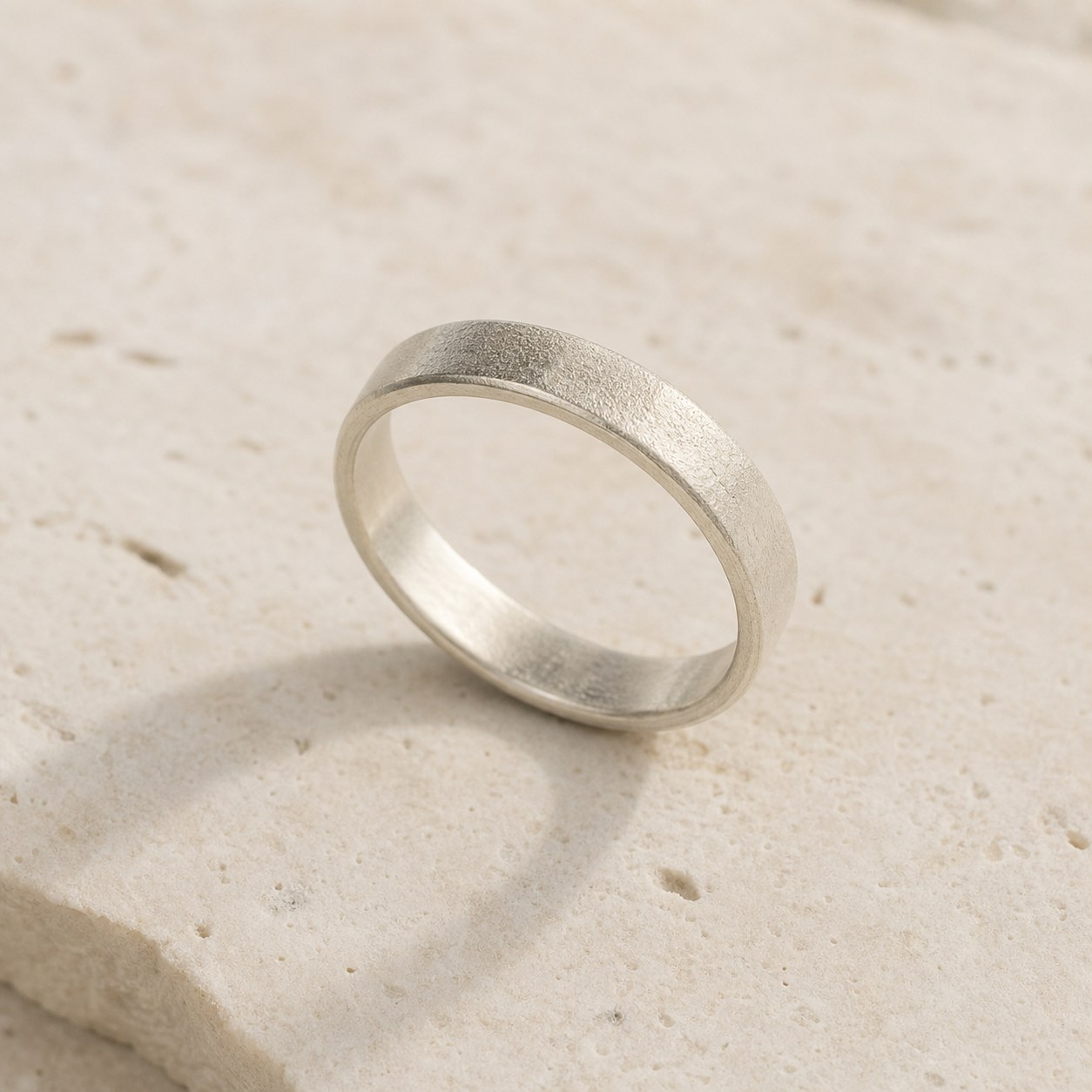
Tarnish changes colour through a surface reaction. Scratches and dents are physical marks. A reflective, satin or granular finish can also become less uniform through handling and wear. These changes can appear together, but they do not have the same cause or the same remedy.
Why cleaning is not a neutral reset
The Canadian Conservation Institute advises examining silver before tarnish removal. Construction, coatings, inlays and the intended finish affect what treatment may be suitable.
Silver polishes are abrasive. They remove tarnish and some underlying silver, and they leave fine scratches. General-purpose metal polishes are more abrasive than products intended for silver. On a hand-finished ring, polishing one area can change the contrast or texture rather than recreate the maker’s original finish.
If the surface, construction or intended finish is unclear, ask the maker or a qualified professional before using a dip, general-purpose metal polish or an online household-ingredient method. This guide does not prescribe one cleaning method for every ring.
Choose the starting finish you want to live with
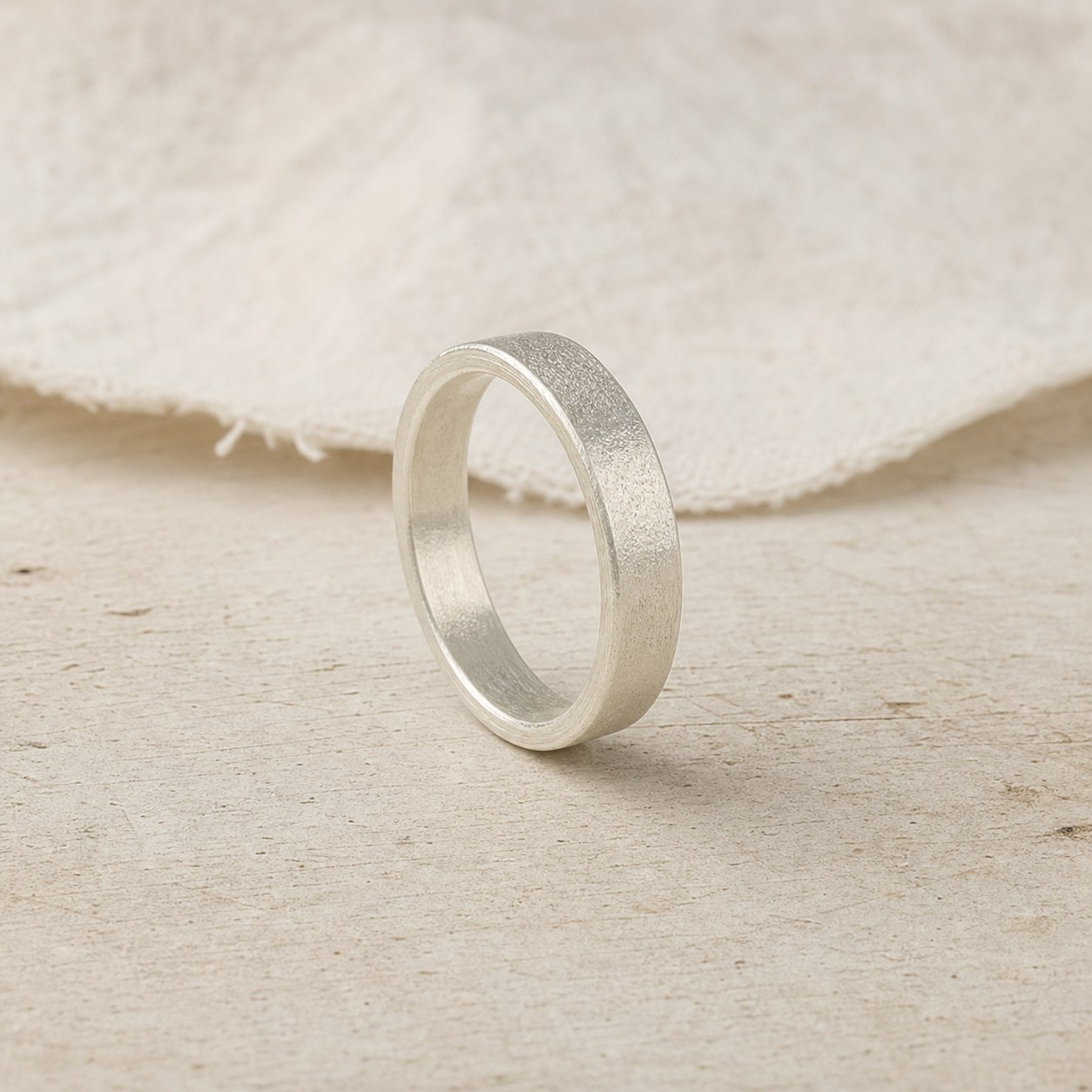
Forged By You currently offers three hand-finished 999 fine-silver bands. Mirror Trace has a reflective face with subtle hand marks. Satin Weight has a satin-matte face. Quiet Texture has a fine granular surface.
Compare the three starting finishes, then choose the one whose future surface changes you are comfortable seeing.
Sources
- Canadian Conservation Institute: understanding how silver objects tarnish — mechanism, colour progression, environmental factors and controlled pure-silver/sterling comparison.
- Canadian Conservation Institute: silver care and tarnish removal — examination before treatment, abrasion and cleaning cautions.