Silver Jewellery Turned Black? What It Does—and Doesn’t—Tell You
If a silver ring turns black, it does not automatically mean the silver is fake.
Silver can react with sulfur-containing gases in the air, forming a layer of silver sulfide at the surface. As that layer grows, the colour may pass through yellow, red-brown or blue before it looks black.
So when a dark patch appears, hold off on the verdict—and on the strongest cleaner you can find. Colour tells you that the surface has changed. On its own, it cannot tell you exactly what the ring is made from, why it changed or how it should be cleaned.
Blackening is not a silver test
Pure silver can tarnish. The Canadian Conservation Institute identifies silver sulfide as the tarnish found on pure silver, produced when the metal reacts with sulfur-containing gases. Real silver and a dark surface are not mutually exclusive.
If the material needs to be confirmed, look to a hallmark, a reliable product record or appropriate professional testing—not the colour in a photograph. Forged by You lists its current bands as 999 fine silver, meaning 99.9% silver.
Purity can change the rate, not remove the possibility
In a controlled comparison described by the Institute, sterling silver tarnished faster than pure silver because the copper in the alloy is more reactive. Yet the same source documents silver sulfide on pure silver.
Purity can influence the rate; it cannot promise an unchanged surface. The concentration of sulfur-containing gases and the relative humidity also affect how quickly tarnish develops. That is why a single timeline for every ring would be misleading.
Look at the surface before reaching for a cleaner
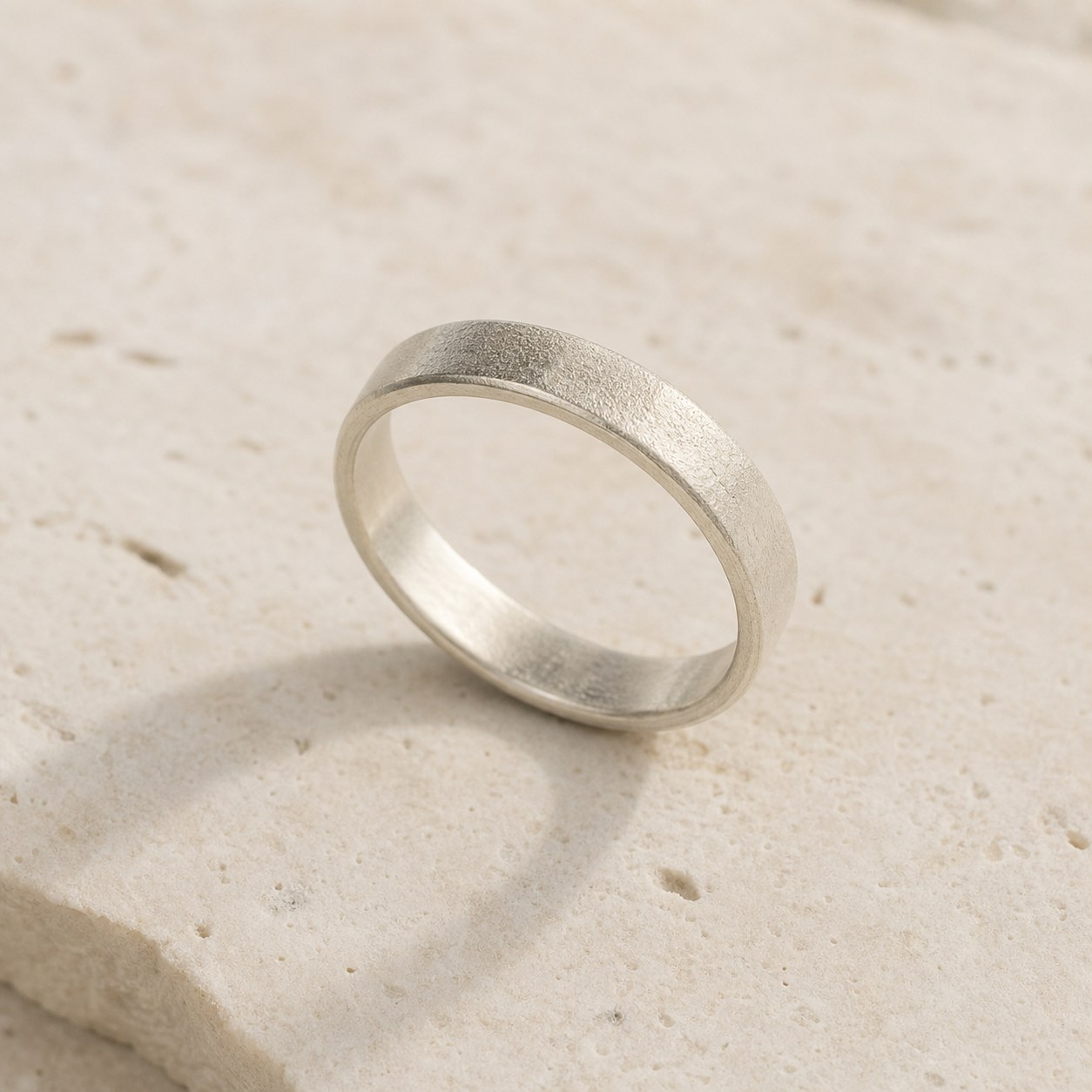
A black mark is not necessarily all tarnish. A ring may also carry dirt, skin oils, other residues, scratches or changes to its finish. More than one of these can be present at once, and a photograph may not show the difference.
Look at the whole ring, not only its darkest spot. If you are unsure about the material, a coating, an inlay or the intended finish, ask the maker or a qualified professional first. The wrong treatment can alter the surface without addressing the actual problem.
“Shiny again” is not the same as “back to new”
Polishing is not a neutral reset. The Institute notes that polishes are abrasive: they remove tarnish and some silver, leaving a pattern of fine scratches. It also advises against general-purpose metal polishes on silver because they are more abrasive and remove more material.
That distinction matters on a reflective, satin or granular finish. A polished patch can end up looking different from the area around it. Familiar household ingredients do not make an online cleaning method suitable for every ring.
If the original finish matters to you, work out what you are trying to remove: colour, residue or signs of physical wear. Cleaning may change the colour without recreating the maker’s original surface. When the construction or finish is unclear, get advice for that specific piece before moving to a stronger product.
Choose a finish you are willing to live with
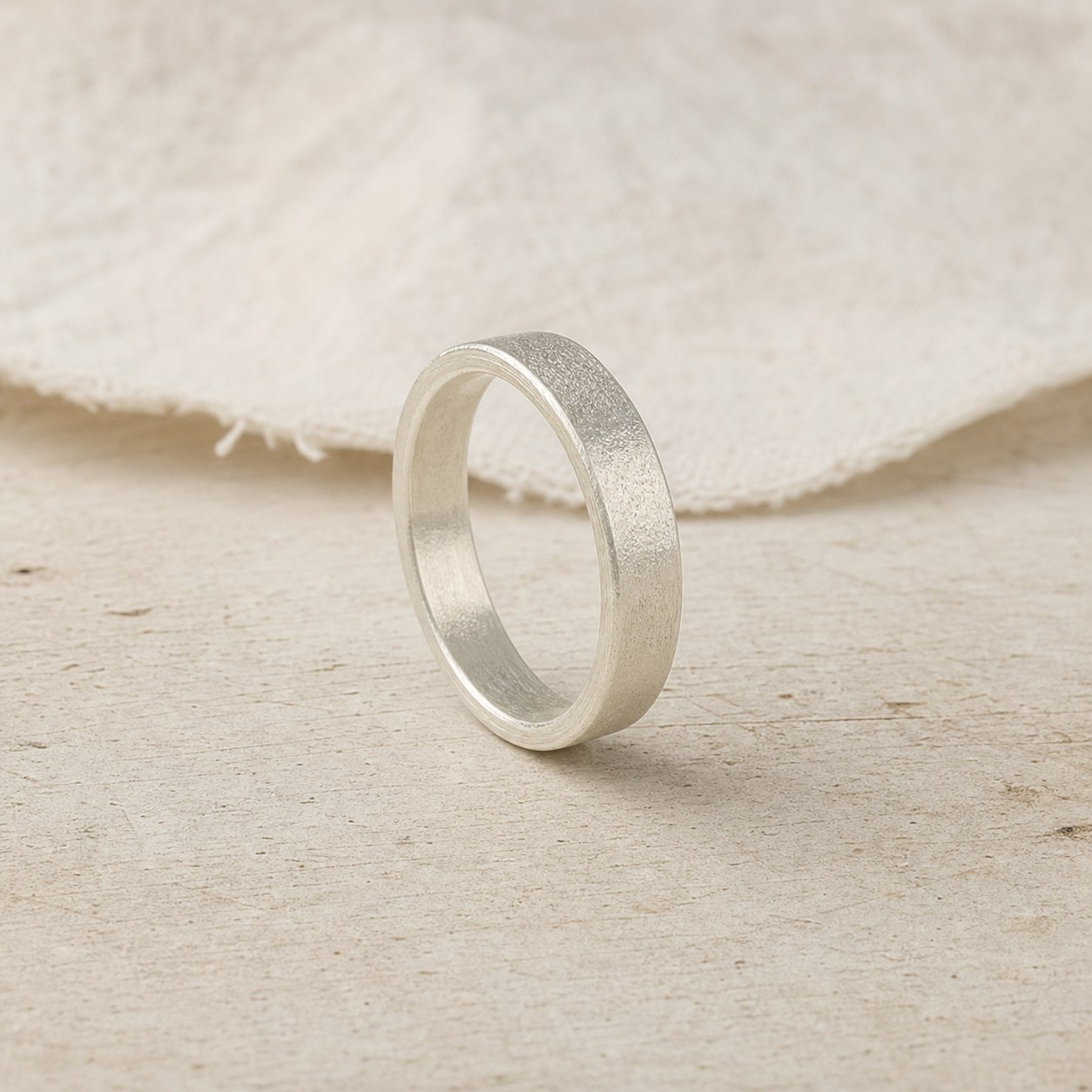
Forged by You currently offers three hand-finished 999 fine silver bands. Mirror Trace has a reflective face with subtle hand marks. Satin Weight has a satin-matte face. Quiet Texture has a fine granular surface.
Rather than looking for a promise that silver will never change, start with a finish you like and are willing to care for. Compare the three 999 fine silver bands.
Sources
- Canadian Conservation Institute: understanding how silver objects tarnish — tarnish chemistry, colour progression, rate factors and pure-silver/sterling comparison; page updated 10 February 2025.
- Canadian Conservation Institute: silver care and tarnish removal — examination before cleaning, polishing abrasion and general-purpose metal polish warning.