How to Measure Your Ring Size at Home in Australia
The most useful at-home starting point is a ring that already fits the intended finger. Measure its inside diameter, compare that measurement with a size chart, and treat the result as an estimate rather than a guarantee. If the purchase matters or the fit is uncertain, a jeweller can check the finger with sizing gauges.
Forged by You currently asks shoppers to choose a US ring size from 5 to 12. The site’s ring size guide lists the corresponding inside diameters and finger circumferences in millimetres and centimetres.
Method 1: measure a ring that already fits
- Choose a plain, round ring worn comfortably on the same finger and hand.
- Place it on a flat surface.
- Measure straight across the opening at its widest point, from one inner edge to the opposite inner edge. Do not include the metal.
- Record the inside diameter in millimetres.
- Match that measurement to the closest entry in the Forged by You size chart.
This method depends on the reference ring being round and fitting the correct finger. The Gemological Institute of America notes that an inside measurement can be compared with a standard chart when the ring is perfectly round. A jeweller would normally use a ring stick or mandrel for a more controlled reading.
Why paper and string are only rough estimates
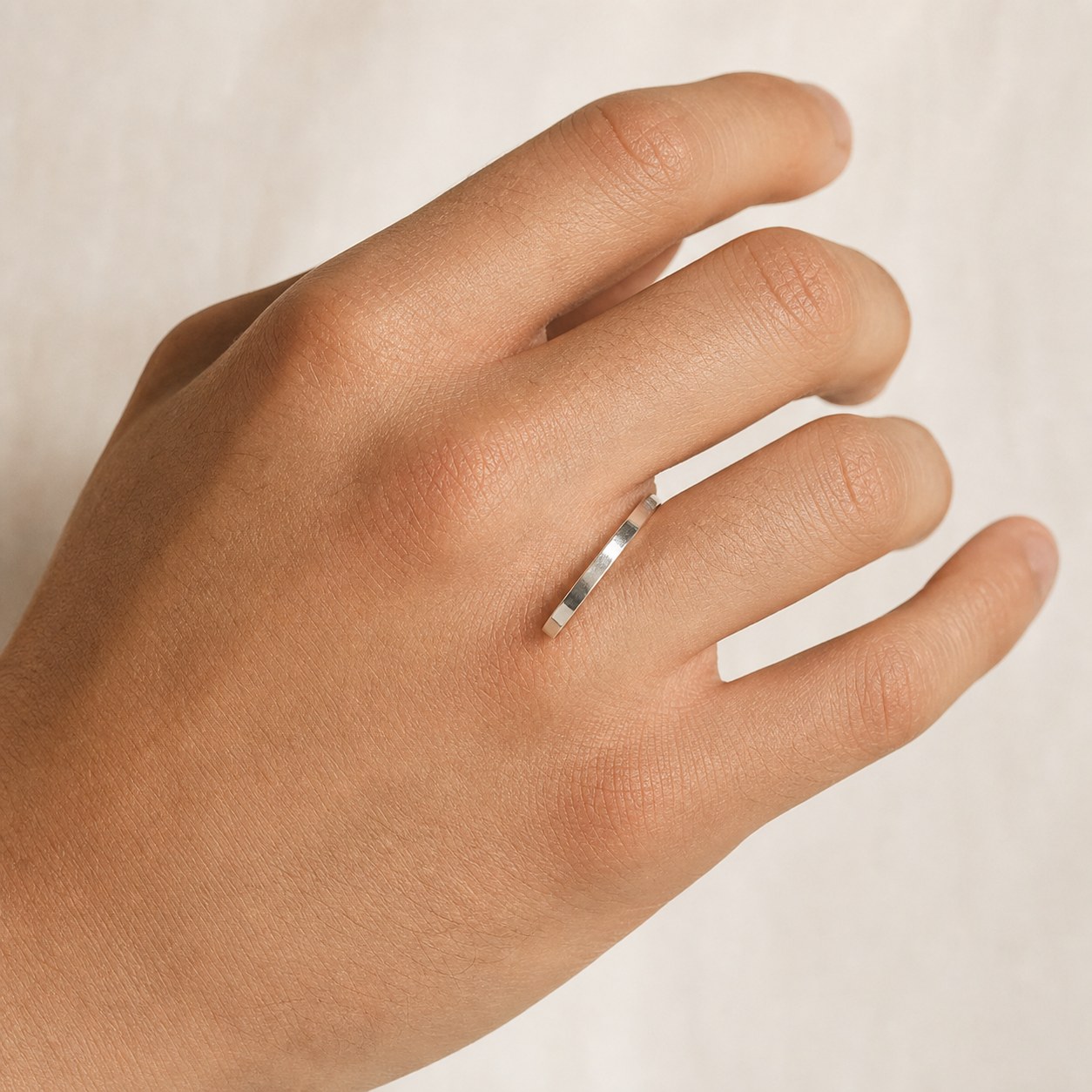
Wrapping paper or string around a finger looks simple, but both can distort the result. String can stretch, paper can bend or curl, and a measurement taken only at the base of the finger may not account for the knuckle.
If a paper measurement is the only option, use it as a preliminary estimate and check that the proposed size can pass over the knuckle. Do not pull the strip tight enough to compress the finger. Repeat the measurement and seek a professional check when two readings disagree.
Fit is more than one number
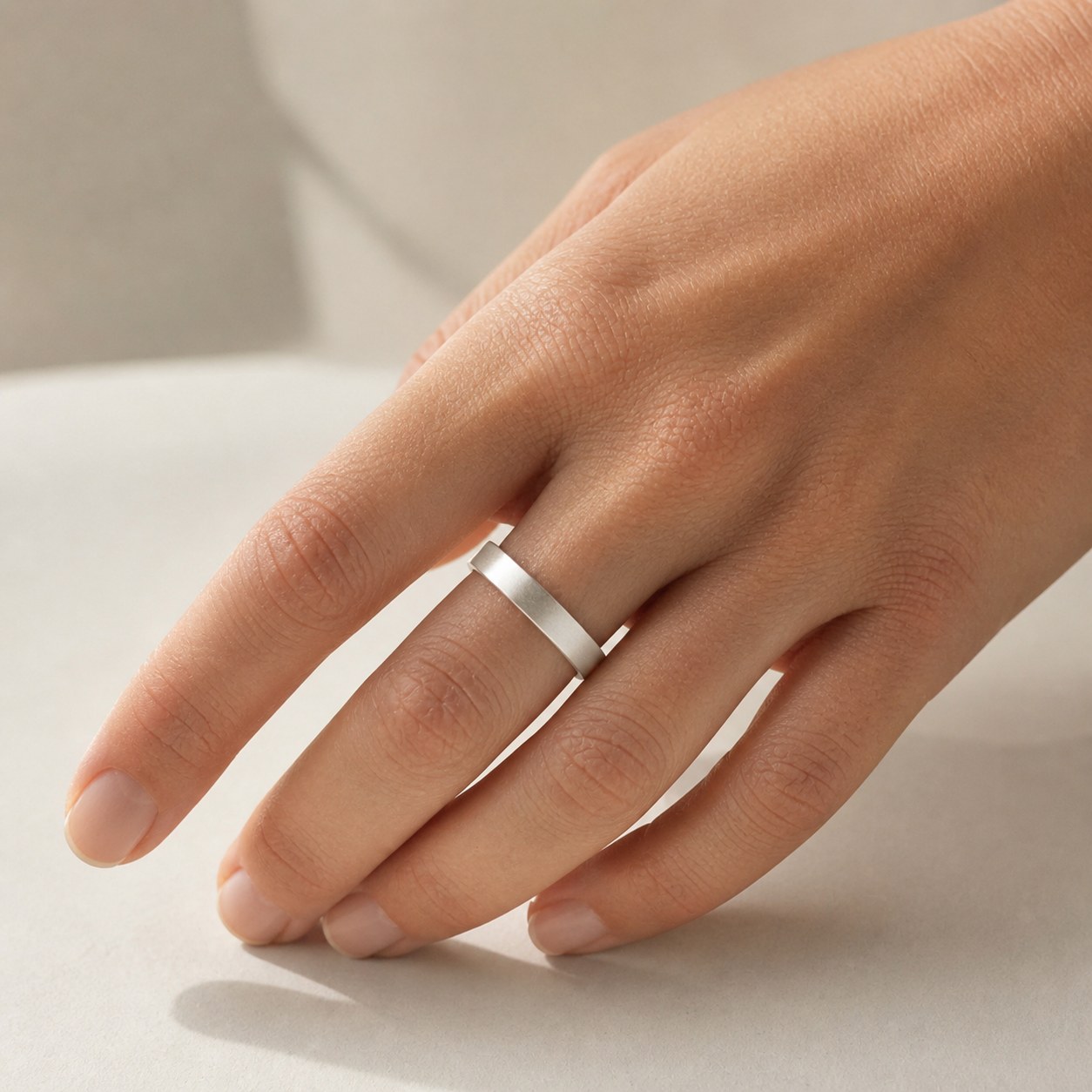
A ring should pass over the knuckle without being forced, then sit securely without causing discomfort. Finger dimensions can also change with temperature and other conditions, so a single hurried measurement may not represent the fit you want.
Band width matters as well. GIA’s professional guidance uses different finger-sizing gauges for narrow and wide bands. That is another reason an at-home diameter is a starting point, particularly when changing from a slim band to a broader one.
Before you order
- Confirm that the reference ring belongs to the same finger and hand.
- Use millimetres and measure the inside opening, not the outside edge.
- Repeat the reading before choosing a size.
- If the ring is not round, the result is unclear or the band width changes substantially, ask a jeweller to measure the finger.
Open the Forged by You ring size chart, then compare the current 999 fine silver bands. If the size is not right after delivery, review the published size-exchange information before contacting the studio.
Sources
- Gemological Institute of America: Accurate Determination of Finger and Ring Sizes — professional gauges, inside measurement, fit over the joint and band-width considerations.
- GIA 4Cs: How to Determine Ring Size — limitations of paper and string, and why professional sizing is more reliable.
- ISO 8653:2016 — current standard describing ring-size measurement with a ring stick and finger gauge set.